


 Global
  United States
What is IoMT in Healthcare?
The Internet of Medical Things (IoMT) is a secure, effective, and complex network of physical assets like diagnostic tools, platforms, Internet of Things (IoT) services, software applications, fragmented systems, disparate medical devices, and electronic health records (EHRs) that monitor, gather, receive, analyze, communicate, collaborate, transmit, exchange, act, and contribute to patient data and care. They collect and decipher valuable insights using data analytics on health-related information like vitals, heart rate, blood pressure, activity, glucose and hydration levels, sleep patterns, medication usage and orders, cardiac rhythm, etc., in real-time with minimal human intervention.
The smart interconnected devices may include wearable biosensors; portable diagnostic gear and ECG headsets; wireless patches; point-of-care devices; hospital equipment; intelligent implants; fitness trackers; remote patient monitoring (RPM) systems; incident reporting and alert systems; smart pills; infusion pumps; intelligent nebulizers; clinical monitoring and decision support setups; connected inhalers and ambulances; smart watches and phones; imaging systems; computerized physician order entry (CPOE) systems; and more developed through electronics manufacturing services.
IoMT solutions development assists patients, clinicians, caretakers, rehabilitators, doctors, physicians, and healthcare providers to gain access to continuous streams of biometric and data flow; implement enhanced workflows; accurate diagnoses and dosing; quickly and reliably reach actionable conclusions; facilitate autonomous offer quality out-of-hospital patient care, performance and experience; improve prompt treatment and outcomes and safety with drug traceability; reduce healthcare costs; and identify potential health issues earlier.
The fields of IoMT healthcare and consumer electronic product development have been growing under the umbrella term of connected healthcare due to an increase in affordable plans, machine-based intelligence, smarter hospital infrastructure, in-person resource efficiency, automation, 5G connectivity, an aging population, preventive medicine, chronic diseases, AI-driven diagnostics, and improved medication adherence. Other reasons include surge in consciousness towards self, proactive, preventative, and individualized care; at-home diagnosis; value-based delivery approach; telemedicine app development and telehealth consultations; predictive risks and big data analytics; sensors; robotics; quantum computing, etc.
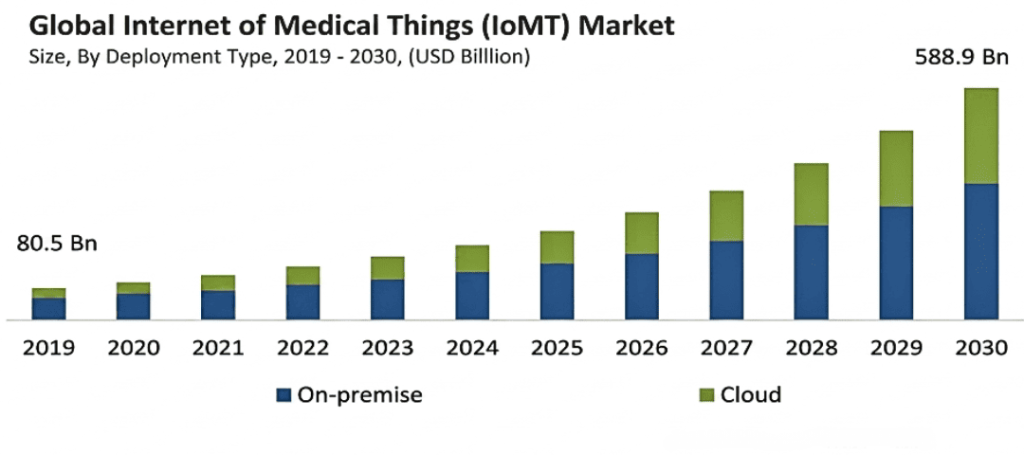
Healthcare 5.0, medtech solutions, and the Internet of Medical Things are revolutionizing, reshaping, and redefining the digital and fundamental architecture of modern medicine, cloud IoT solutions, and computing in sustainable healthcare ecosystems to be more responsive, efficient, accessible, reliable, convenient, patient-centric, and independent of routine or sporadic visits, tasks, checkups, procedures, and self-referrals. The current global market for IoMT development solutions is estimated to be around US $345.8 billion as of 2026 and is expected to surge and reach an approximate value of US $658.6 billion by 2030, increasing at a CAGR of 18.2% during this forecast period. This blog details the significance of this field, its key applications, best integration practices, and its various advantages that make healthcare safer, smarter, and connected.
How Does IoMT in Healthcare Work?
IoMT vs IoT
IoT development services produce autonomously communicating devices over a given network that gather and route data for healthcare purposes through sensors, actuators, machine-to-machine, device-to-cloud, and device-to-device communication. It can be seen in motion and location detection in smartphones, smart thermostats in a building, smart home devices, moisture sensors in crop irrigation, etc. Any device connected to the internet that enables automated communication amongst systems and objects falls under this category.
Under this segment, IoMT is a subset that deals with autonomous communication between medical devices specifically across a network to automate processes without any direction from healthcare professionals. This field deals with patient treatment, care, health management, and related challenges, whereas IoT can encompass other industries like home automation, manufacturing, etc. Also, the former requires more stringent data integrity, security, privacy measures, and compliance regulations like HIPAA in the US, in comparison to IoT due to the sensitive nature of patient data.
In addition to this, this field has a targeted end-user impact on clinical researchers, caregivers, and patients. It involves well-being applications, long-term intervention, and life-saving outcomes, unlike IoT, which offers efficiency and caters to a wider consumer base. Medical device contract manufacturing and Internet of Medical Things devices pose complex integration challenges, such as standard adherence, legacy system compatibility, medical data accuracy, etc., as compared to IoT, which does not require much environmental regulation.
Technologies
IoMT development services utilize advanced technologies to securely collect, process, share, and store patient data across multiple locations for providing real-time support to medical professionals. This may include cloud computing for increased data accessibility and protection against unauthorized access for coordinated care and simultaneous response. It also involves big data prescriptive analytics for better insights, AI-and machine learning-based analysis of data sources, pattern identification, trends indicating potential health risks, proactive intervention, and personalized treatment plans.
Furthermore, medical device engineering services include securing and encrypting data to function transmission across devices through cellular networks and others to ensure privacy, efficiency, and dynamic care delivery. Natural Language Processing (NLP)-powered virtual assistants and chatbots can support decision-making, patient engagement, and treatment plan adherence. EHR integration with connected devices provides a comprehensive and updated view of the patient’s historical data without any digital noise and errors in manual data entry. Edge computing is another area on the rise that allows local data processing for urgent cases instead of letting the data travel slowly to distant servers and the cloud.
Blockchain enables next-generation connected solutions that can resolve challenges with features like interoperability, access management, device authentication, end-to-end encryption, consent automation, supply chain transparency, smart contracts, immutable ledgers, and decentralized design for secured sensitive data transmission between systems, devices, and stakeholders. Apart from artificial intelligence in healthcare, other advanced embedded technologies under this umbrella developed through hardware development services include 5G-ready wearables, edge AI boxes, smart implants, and sensors that can easily integrate into broader clinical ecosystems like EHRs, reimbursement systems, logistics chains, and hospital workflows.
Working
There are certain steps involved in the functioning of these devices, such as the following.
- Data Acquisition: This involves interconnected devices like sensors, monitors, detectors, actuators, camera systems, etc., that collect data and transfer the same for further processing.
- Data Transmission: It is transferred to a smartphone, gateway, bedside hub, or directly to the hospital network through application layer protocols like MQTT, HTTP/REST, and WebSockets using communication technologies, such as Bluetooth Low Energy (BLE), Near Field Communication (NFC), Wireless Fidelity (Wi-Fi), ZigBee, cellular/5G, Local Area Networks (LANs), etc., produced by IoT application development services.
- Data Processing: Once received, analog data is aggregated and converted into digital signals, pre-processed (noise filter, feature extraction, signal normalized, abnormality detection, and threshold-based alerts), and transmitted to the cloud, healthcare IT systems, or dedicated data centers, as per HL7/FHIR standards. The processed data is managed and analyzed for insights, patterns, trends, abnormalities, health risks, better decision-making, tracking the location of admitted patients in hospitals, connecting ambulances to medical facilities en route, etc.
- Analytics & Clinical Action: Ultimately, insights can be perceived from incoming measurements using statistical models, rule-based algorithms, or machine learning through clinician dashboards, EHR systems, mobile applications, nurse-call systems, or RPM platforms powered by generative AI in healthcare, such that alerts and adjustments can be initiated in treatments and intervention.
Types of IoMT Healthcare Devices
Here are the main types of healthcare devices or segments powered by the Internet of Medical Things.
In-Hospital Systems
This segment includes telehealth, administrative, and management solutions for qualified personnel, environment, assets, inventory, patient flow, energy monitoring, and related devices. Any type of IoT device that is used in a hospital setting, right from tracking medical representatives and staff to smart cleaning, is included under this. For example, smart IV pumps, bedside monitors, infusion pumps, smart ventilators, RFID-based stock monitoring systems, hospital beds integrated with analytical dashboards, patient movement trackers, and connected imaging systems for precise medication delivery, real-time vital alerts, and streamlined workflows.
In-Clinic Systems
IoMT development services can deploy solutions in clinics that assist medical professionals and exhibit administrative and clinical functions that deliver remote or telehealth services. They enable personnel to receive patient data and use medical devices even when they are remotely located. These systems are integral to patient quality care, safety, experience, immediate access to AI medical diagnostics, and treatment outcomes. An example would include IBM Watson and ImpediMed’s SOZO, a bioimpedance spectroscopy device that is FDA-cleared for AI melanoma detection and to scrutinize lymphedema and post-operative cancer treatments.
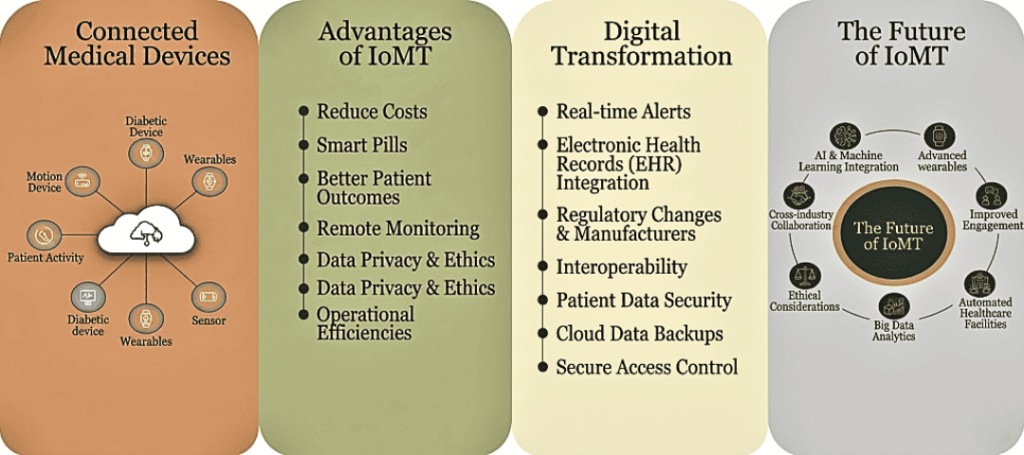
Overview of IoMT development services: Current applications, benefits, and their future
Community Systems
These systems are utilized or dispersed throughout wider geographical locations, such as for tracking patients en route in ambulances. It includes emergency response intelligence systems that assist ER personnel, first responders, and paramedics; and mobility services, such as passenger vehicles with patient monitoring systems during transit and IoT-based parking management systems. These systems are generally deployed in shared or public spaces for emergency responses in a given community.
The public Internet of Medical Things also encompasses point-of-care devices like ultrasound machines, blood glucose meters, automated external defibrillators (AEDs), and medicine dispensers deployed in a non-traditional environment; environment monitoring devices with harmful water; air quality trackers like HVAC; IoT-based water quality monitoring system; logistics systems with sensors to measure humidity, temperature; other transport improvements for the delivery of healthcare services and products; and kiosks like Australia’s Observe Care with emergency call buttons that connect patients with doctors over touchscreen displays, etc.
In-Home Systems
IoMT development solutions can deploy systems that allow healthcare stakeholders to transfer data related to chronic disease management from homes to hospitals and other locations. They ensure that patients can be easily monitored and receive the required medical attention in case of issues in mobility like post-operative recovery and elderly care. This segment encompasses RPM, personal emergency response systems (PERS), weight scales, blood pressure cuffs, home dialysis machines, and telehealth terminals.
On-Body Systems
Alongside clinical-grade wearables or consumer healthcare devices produced by wearable product design and development services, this segment is mainly focused on personal wellness and fitness, for example, activity trackers, sports watches, smart pills, neuromodulation, neurostimulation and electric muscle stimulation device, sugar level trackers, wearable ECGs or cardiac monitors, and smart clothing. The former are utilized and recommended by clinical authorities for patient supervision, whereas the latter are basically wearable medical devices that can connect with RPM systems.
Mobile Systems
This segment includes mobile devices for networked glucose monitors like Dexcom G, Abbott FreeStyle Libre 3, etc. cellphone/smartphone-connected pacemakers like Medtronic BlueSync and MyCareLink Heart app; and Bluetooth-enabled devices like digital thermometers, smart inhalers, telehealth kits, and others. These devices feature radio frequency identification (RFID) tags, NFC, and intuitive interfaces for medical tools to communicate data to IT systems, medical personnel to access the same, and patients to control the operations as per their experience.
Applications of IoMT in Healthcare
Given below are some of the applications powered by the Internet of Medical Things.
Remote Patient Monitoring
Patients under rehabilitation, recovering from surgeries and chronic conditions like diabetes, cardiovascular diseases, and Alzheimer’s can be monitored for vital signs, fainting, falling, geo-boundary breach, or distress remotely using pulse oximeters, navigation systems, wearable health monitoring devices like electrocardiograms (ECGs), etc., in PERS. RPM programs diminish the necessity to frequently visit hospitals, physiotherapists, diagnostic centers, and other related places for potential disease and complication detection. The integration of such devices not only reduces the overall costs but also improves quality care and patient outcomes.
Medical Imaging
Computed Tomography (CT) and Magnetic Resonance Imaging (MRI) scanners utilize X-rays, radio frequency pulses, etc., to generate images on internal body structures. These scanners for embedded image processing can be controlled and maintained remotely to obtain real-time information and adjust existing settings.
Smart Inhalers
Patients with chronic respiratory conditions like Chronic Obstructive Pulmonary Disease (COPD), asthma, and other lung disorders need to monitor medication and require constant dosage reminders. This can be eased by using connected inhalers and applications that guide them for correct usage and improve medication adherence. These inhalers powered by artificial intelligence in healthcare utilize sensors to track breathing trends, patterns, valuable insights, or potential issues and alert medical professionals to customize treatment plans.
Vital Monitoring
Connected glucose monitors, heart and respiratory rate, body temperature, blood pressure, and oxygen saturation tracking devices help patients check their blood sugar levels and vital signs from their homes in a convenient manner. These embedded systems and Internet of Things-powered devices collect important patient data, can test sugar levels, detect minute changes in diastolic and systolic blood pressure, and transfer all crucial data to medical professionals and healthcare providers. This facilitates necessary, timely intervention, and remote patient monitoring.
Wearable Trackers
Wireless multiparametric sensing devices and consumer-grade wearables include fitness trackers like Fitbit, synced smartphone apps, and smartwatches like Apple Watch and Empatica Embrace for seizure detection. Clinical-level products and medical-grade wearables go one step further to measure and provide insightful data about sleep patterns (ResMed’s connected sleep masks against sleep apnea), heart rate, physical activity, pain management, other health metrics, and overall well-being. Users can easily take control of their health conditions; receive fitness recommendations as per their routine, characteristics, and medical history; identify risks early; and report variations in standard parameters when observed.
Connected Implants
Patients suffering from critical health concerns can utilize implantable devices like pacemakers, orthopedic implants, etc., for their diagnostic and therapeutic benefits. These devices consist of sensors that read strain, displacements, body temperature, and other physical changes and communicate this data to healthcare providers for timely medical assistance. Common examples of IoMT solutions development include Zimmer Biomet’s Persona IQ smart knee implant and my mobility app that tracks key metrics like stride length asymmetry, speed of walking, posture, gait, step count, and range of motion over clinical dashboards while the patient is undergoing personalized rehabilitation.
Virtual Assistants
Robotic and virtual home assistants can monitor patient health round-the-clock to extend individualized quality care. Similar to at-home nurses and caretakers for guided intervention, devices and platforms like Philips HealthSuite integrate continuous data flow with virtual consultation, engage patients as per the prescribed healthcare plan, and ensure adherence to the required medication and dosage. These function on NLP and Natural Language Understanding (NLU) to provide emotional support and resolve medical inquiries.
Smart Pills
These are minute electronic, ingestible robots and sensors that can be swallowed by patients to examine and track their digestive system and internal organ performance, ingestion time of medicaments, and other prognostic information. These pills enable personalized medicine and precise diagnosis through wirelessly collected data in lieu of invasive methods for medical professionals.
Others
Furthermore, there are internet-controlled smart drug dispensing cabinets, connected inhalers, and smart infusion pumps that remotely and automatically deliver nutrients, fluids, and medication doses to the patient in a controlled and personalized manner. Robotic arms can remotely perform less invasive procedures and complex surgeries precisely, such as mitral valve surgery and coronary artery bypass.
Segments of IoMT Healthcare
Here are the main market segments/audiences where these devices are in use.
Manufacturers
Medical technology, devices, pharmaceutical, and medicine manufacturers gather, communicate, and leverage patient data to enhance drug management and production quality assurance procedures.
Patients
Patients can stay connected with their healthcare service providers via IoMT solutions development and devices in the absence of clinics, especially in underserved areas. This minimizes costs, enables quick responses, and other related benefits during medical emergencies.
Medical Professionals
These devices optimally utilize hospital infrastructure and resources to allow healthcare workers to consistently monitor disease progression, support patients in real-time, and diminish emergency risks. They are also helpful in workflow automation of routine administrative tasks, streamlining follow-ups, and coordinating patient care in case of home treatment strategies.
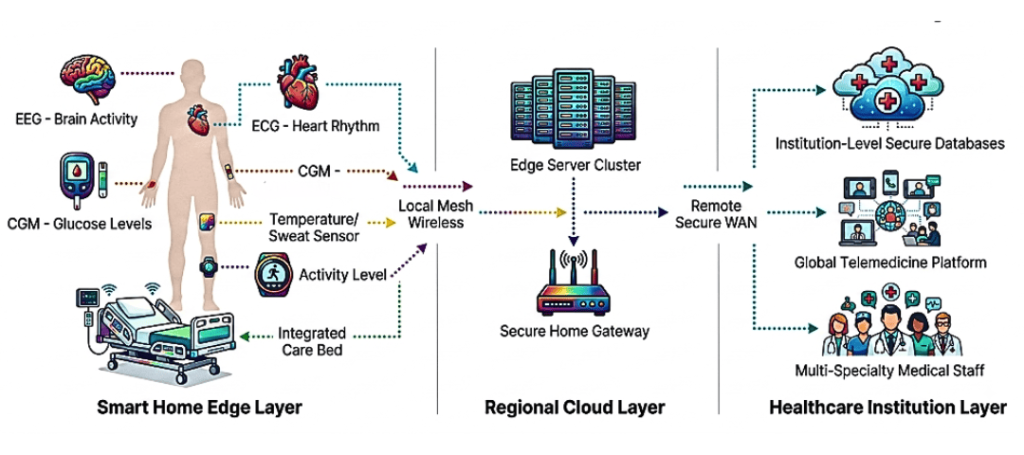
High-level architecture of next-gen home-based IoMT healthcare setting
Advantages of IoMT in Healthcare
There are various advantages offered by connected devices and systems, such as through and for:
- Costs: Remote, cloud-based, and cost-effective monitoring and treatment for patients.
- Accuracy: Error-free, swift, and data-driven actionable conclusions for caregivers.
- Management: Expensive medications and chronic diseases are managed smartly and safely.
- Savings: Reduced visits, stays, and re-admissions save costs at both ends.
- Security: Easy, secure, and updated patient data access from machine-to-machine.
- Analytics: Readily available analytics on high-volume, constantly automated data and workflow.
- Communication: Simplified real-time interaction between personnel and patients.
- Inventory: Building modifications and tags for inventory, equipment, and supply checks.
- Experience: Power over health, access, and transparency resulting in a better patient experience.
- Flexibility: IoMT development services offer patient care without any physical presence.
- Alerts: Intelligent sensors to notify personnel of vital signs, emergencies, and care needs.
- Diagnosis: Convenient and accurate diagnostics through pattern detection for treatment success.
- Claims: Smoother insurance claims and underwriting operations via collected data against fraud.
- Research: Accelerated and affordable medical research via statistical analyses on conditions.
- Personalization: IoMT-based individualized treatment as per vital statistics and diagnoses.
- Visibility: Upgraded operations, centralized facility control for admins, and high-res imaging.
- Planning: AI predictions for detecting complications, risk scoring, and preventable stays.
- Adherence: Adaptable, high-quality care plans adhering to regulations in healthcare.
- Maintenance: Proactive monitoring, maintenance of equipment for optimal functions and downtime.
- Accessibility: Underserved and rural areas can avail benefits via remote clinics and technologies.
KritiKal: Bringing IoMT Care Closer to Patients
IoT-powered connected devices manufactured by medical device design services generate and transfer reliable, crucial patient information and AI/ML, cloud, and big data-enabled insights to caregivers in real-time consistently with low latency. They empower remote care through continuous monitoring to support improved patient outcomes, strengthen data-driven decision-making, and digital healthcare system infrastructure. These devices streamline hospital workflows through alerts, efficient treatment and capacity planning, risks and readmission reduction, data-backed diagnoses, tailored interventions, and better communication between patients and medical professionals.
Widespread adoption of IoMT development solutions faces certain challenges, such as scalability, regular maintenance, low processing capacity, high power consumption, interoperability, lack of digital acceptance, trust, equipment and component incompatibility, stringent regulatory compliance, cybersecurity gaps, Man-in-the-Middle (MITM) and eavesdropping attacks, botnet infections, real-time device lifecycle tracking, training data integrity, processing delays, functionality in fragmented and heterogeneous environments, IP conflicts, and multi-vendor ecosystems.
Other challenges include accessibility, large number of interconnected devices, physical form factor or device constraints, un-patchable firmware development services, costs, model manipulation, connectivity dilemma, limited bandwidth, device hijacking and poisoning, high blast radius of data breaches, spoofing, ransomware, data governance, misinterpretation, and ownership, accountability, legacy infrastructure, lack of required workforce skills, AI-generated impersonation, Distributed Denial-of-Service (DDoS) attacks, semantic drift, protocol multiplicity, etc.
KritiKal Solutions applies artificial intelligence in healthcare, medical device testing, and strives to follow strong standards like HIPAA, FDA, Quality Management Systems Regulation (QMSR) in 21 CFR Part 820, FHIR, HL7, EMA/E Medical Device Regulation (MDR), Association for the Advancement of Medical Instrumentation (AAMI), NIST Cybersecurity Framework (CSF), NIST SP 800-53 and 800-66, ISO/IEC 80001-1, 27001, and TR 24028. Other regulations may also include MDCG Guidance, Secure Product Development Framework (SPDF), ENISA IoT and ICS Guidelines, Guidance for Cybersecurity in Medical Devices (2023), Health Industry Cybersecurity Practices (HICP), WHO Global Patient Safety and Digital Health Strategy (2021-2025), IEEE P2933, 1708, 11073, 802.11, and 2621 by the Certification Advisory Committee (CAC), etc., to regulate such challenges.
Our human-centered solutions exhibit agile network management, IoT device configuration management, zero-trust security, micro segmentation, traffic handling, preventive actions, holistic care models, sped-up troubleshooting, robust design controls, responsive edge computing, decentralized infrastructure, patient data integrity validation, encryption and privacy using TLS 1.2+, IPSec, AES-256, and continuous monitoring, We also implement common data formats and communication protocols for electronic Protected Health Information (ePHI), IoT for predictive maintenance, asset tracking, multi-factor authorization, intrusion detection, identity and access management (IAM) and restrictions, collaborative innovation, and layered process protection practices.
We ensure secure data exchange over public networks, on and off-network asset and inventory checks, cloud security and compliance, model governance in case of multimodal AI in healthcare, deep packet and traffic inspection, EHR protection, vulnerability and risk management that are necessary to establish integrated, networked, scalable, safe, connected, patient-centric, and smart IoMT-powered devices. Please get in touch with us at sales@kritikalsolutions.com to know more about our embedded products, platforms, services, and realize your business requirements.

Aman Tiwari currently works as an Embedded Firmware Engineer at KritiKal Solutions. He is proficiently skilled in working with embedded systems, RF mesh networks, bare metal programming, GPS tracking, real-time monitoring, Bootloader, C, Embedded C, smart lighting development, and more. With his ability to work efficiently in teams and more than 5 years of experience working with in this field, he has assisted KritiKal in delivering various projects to some major clients.