
 Global
  United States
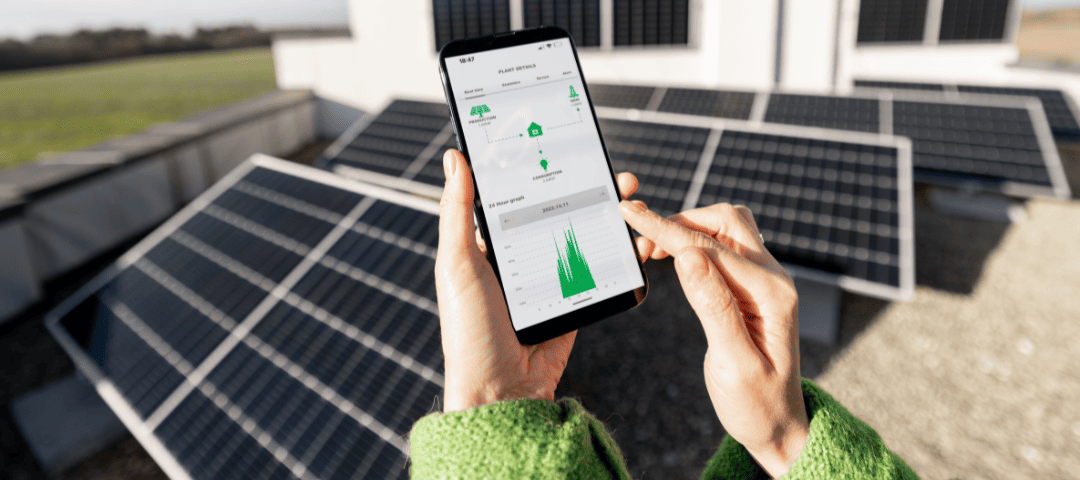
What is an IoT Solar Powering Monitoring System?
Solar power is being considered the fastest-growing source for renewable energy solutions that is being adopted globally to reduce fossil fuel dependency. IoT allows lightweight solar cells to be embedded in panels and generate power utilized for cooling, heating, lighting, and more. This energy output is environment-friendly, cost-effective, sustainable, easily available, and pollution-free, and the development of these IoT systems generates multiple employment opportunities. Businesses look forward to harnessing its complete potential, improving cell efficiency, reducing panels and other solar equipment costs, enabling quick, large-scale solar photovoltaic (PV) installations, and optimizing distribution of solar plant-generated power.
Challenges associated with IoT in solar energy generation include continuous and real-time remote monitoring of plants deployed in inaccessible areas to check their yield, power usage, and timely maintenance. This issue can be resolved by utilizing IoT-based monitoring, where IoT is an interconnected network of systems, software, and devices that gather, monitor, and communicate collected information via smart embedded sensors, the internet, and neural networks. Embedded system and Internet of Things maximize the productivity of solar PV installations by regulating current, voltage, temperature, panel health, and irradiance during generation, transmission, and distribution processes across devices. Such solutions reduce end-user reliance on local utility providers, as they can be easily mounted on rooftops and electric vehicles (EV) and accessed through cloud and protocol stacks,
These Internet of Things (IoT) services are transforming the way we interact with our devices in a connected environment while overcoming challenges like deployment options, high maintenance expenses, and power constraints. These self-sufficient solutions operate indefinitely and are used for performance simulations, tracking, and improving performance, study power usage trends; and identifying causes and locations of accidents and breakdowns to enable preventive maintenance. The current global market for IoT in solar power monitoring system is estimated to be around US $121 million as of 2025 and is expected to surge and reach an approximate value of US $150 million by 2031, increasing at a CAGR of 3.5% during this forecast period. This blog explores the components, functioning, advantages, and applications of reliable and user-friendly IoT-based solar energy monitoring devices.
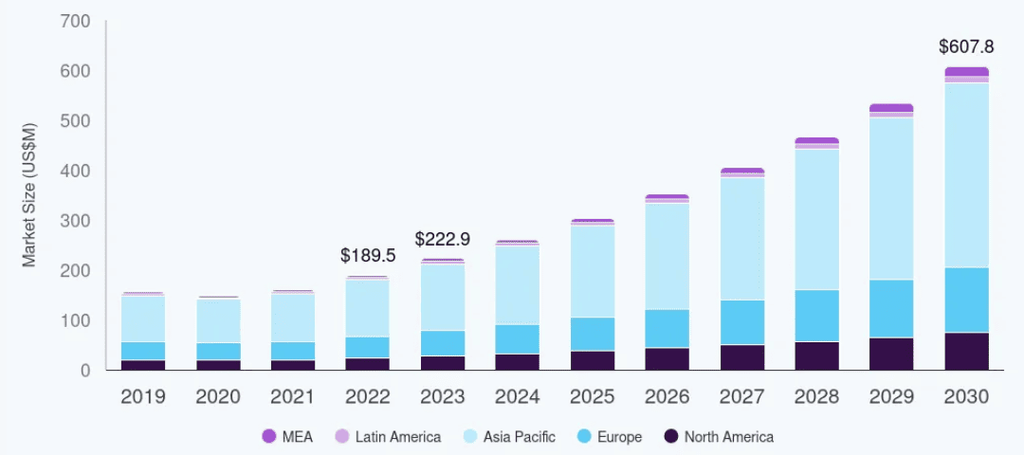
Source: Grand View Research
Growing market size of IoT in solar power monitoring system during the forecast period 2019 to 2030
Components of IoT Solar Powering Monitoring System
Component selection is an important task in system designs, as it is key to fault detection in solar PV installations. Here are the main components used in IoT-powered solar power systems.
Development Board
Development boards are ready-made circuit boards that assist embedded developers in prototyping, testing, and programming low-cost processors like ARM Cortex-M0+, M4 (sleep modes: STM32L0, ESP32-S2), and microcontrollers like ESP32, ATmega328, etc. They usually consist of power circuits, programming interfaces, built-in components like voltage regulators, integrated circuits (ICs like Texas Instruments BQ25570 and Analog Devices LTC3105), LEDs, resistors, pin headers, USD interfaces, microcontrollers, etc. Dual-core ESP32, Arduino Nano 33 IoT, Raspberry Pi Pico W, STM32 Nucleo, Arduino MKR Wi-Fi 1010, and ESP8266 NodeMCU development boards for solar power solutions can be customized as complete-feature boards or standalone chips.
Solar Panels
The PV panel forms the heart of the entire system; thus, it is necessary to consider efficiency to panel size ratio. For instance, modern panels account for 15-23% efficiency, where small panels are subject to higher efficiency. The size, form factor, or dimensions of the panels must match power needs and device enclosure. Moreover, monocrystalline panels offer better efficiency at higher costs relative to polycrystalline ones. Although flexible panels can be installed over curved surfaces, they are less efficient, and one must ensure that the panels (usually 1-5W) are able to adjust temperature fluctuations, UV exposure, and moisture.
Solar Circuit
A maximum power point tracking (MPPT) circuit receives high voltage from interactions at the solar power plant and steps it down for battery (lithium) charging and other low-power solar panel business needs. For example, LT3652, BQ24650, BQ25703A, CN3791, and other battery chargers are utilized in solar plant growth, are powered by solar circuits, function with any temperature sensors, and can be embedded into IoT solar systems for serving various industrial applications. The IoT software component mainly involves Integrated Development Environment (IDE) like Arduino IDE and Embedded C programming.
Sensors & Invertors
The increase in energy or current output delivered by solar panels is directly proportional to the sunlight received and risen temperature and linearly indirect to the voltage output. Wireless current, voltage, and temperature sensors like thermocouples attached or placed on the center or backside of any solar panel accurately measure the temperature, etc. Intelligent inverters convert direct current, that is, DC developed from solar panels, into alternating current (AC) to be utilized across businesses and homes. They are also capable of adjusting energy flow to match current requirements and increase system efficiency. The buck converter topology of DC-DC converters, or step-down voltage regulators, is commonly used to reduce input voltage and generate desired output by manipulating the duty cycle (time of converter being active relative to its total switching cycle).
Battery
Strong lithium batteries (Li, LifePO4, supercapacitors, NiMH) are important as solar energy is intermittent in nature, and they support solar panels in stabilized operations by powering microcontrollers even during monsoons and power outages. These batteries are built via robust hardware development services and powered by artificial intelligence (AI) techniques that support microcontrollers that are consistently interacting with solar panels. For instance, microcontrollers transmit 100 milliampere (mA) of current load, while a 7.4V lithium-ion battery (safe, high-energy density, and longer lifecycle) with any temperature sensor supports powering such system transmissions for least 4-5 days of outage. It is noteworthy to mention that the charging current in a solar power monitoring system should be at the minimum five times the load current while connecting the battery in this scenario, whereas a 1 MV solar farm might consist of over 2500 solar panels and generate voltage accordingly.
Network
An active Wi-Fi broadband connection enables specialized protocols and supports narrowband for IoT application development services and environments via a centralized platform. A uniquely placed wireless 5G network can function at different grid consumption levels and signal ranges. It enables IoT-enabled competencies, including reactive power, low-latency communications, and applications like solar panel health monitoring, video-based crop yield tracking, environmental sensing, and more. Development boards process data from analog pins and transmit data via IoT gateways and long-range, low-power communication protocols, such as cloud IoT solutions for storage, computing, and data analytics; I2C Modbus (RS485), Wi-Fi 5G, Ethernet, LTE 4G, Zigbee, Bluetooth, LoRa WAN, GSM, Sigfox, NB-IoT, TCP/IP, MQTT, HTTPS, etc. The overall power consumption can be reduced through a less frequent batch data transmission strategy.
Potential Divider
A voltage divider is an integral part of a solar panel monitoring system that divides or scales the voltage to match the microcontroller’s input and output voltage range. It can be a potentiometer with a division factor of 6V in case of an MPPT circuit board or a generic divider otherwise. Power management through MPPT charge controllers can increase energy harvest as compared to simple controllers, and low-dropout regulators can provide regularized voltage with reduced power loss. DC-DC converters turn battery voltage into necessary system voltage, and load switches occur amongst selective power components as and when required.
Shunt Resistor
Resistors render voltage drop as and when nominal current flows through them as per Ohm’s law, and this property is used to measure the energy flow by shunt resistors that are designed to exhibit very low resistance. Such resistors with certain wattage (1W for projects with small power dissipation needs) are widely used in greenhouse and solar panel monitoring, as they can produce the required voltage amount for microcontrollers to measure. Millimeters can be used to set voltage, and potentiometers are useful to adapt to any solar panel with low or high voltage ratings. A light-dependent resistor (LDR) or photoresistor can be controlled by light intensity exposed at the solar plant for photoconductivity and variable resistance.
Features of IoT Solar Powering Monitoring System
In this section, we will go through the essential features of these systems.
Plant Monitoring
The IoT-based system transfers information related to solar plants in real-time through sensors mounted on the panel that receive bulk information. This includes transferring efficiency data, power generation rate, and diagnostic parameters via cloud through an end-to-end encrypted channel. Sensors trigger notifications to the remote, control area, or mobile web platform in case of managing contingency, panel dirt, faults, or malfunction, which also receives weather forecast reports to accordingly make adjustments to the system.
Data Storage
Cloud-based network services serve as voluminous data storage, exchange, and simultaneous handling platforms between various control towers and power stations. The attained internet-powered network structure reroutes power between stations through hardware-level data encryption during need to maintain the system’s functioning.
Predictive Distribution
Data-driven IoT solutions keep track of power distribution and monitor functional parameters of the solar plant. The in-built AI component learns power usage patterns to predict trends of requirements, which help in producing surplus power beforehand and avoid outages. In addition, the IoT in solar power monitoring system can predict when the components or equipment may fail so that expected issues can be repaired prior to downtime.
Updates Integration
These systems can notify and integrate new updates on multiple devices connected to them on demand while maintaining critical solar plant functions. As they are integrated with the grid, they can balance energy supply and demand and track key performance indicators of all connected components to increase stability and productivity of the solar system through necessary adjustments whenever required and possible. Intuitive liquid crystal display (LCD) user interfaces (UI) allow users to stay alert, informed, monitor, and regulate IoT solar systems and updates through web portals and mobile applications.
Productivity Tracking
AI algorithms reduce plant failures, operational, and management costs by predicting the functioning of connected devices over the long term and providing analytical insights over the cloud. Smart controllers and inverters adjust solar panel energy production and system functioning as per data analytical patterns and energy requirements for optimized use and low wastage.
Dashboards
These systems can feature multiple dashboards for management (multi-plant portfolio), technicalities (high-level parametric overview of string-wise, inverter, and plant), and more. An advanced analytics dashboard can generate multiple graph views, critical health parameters and detailed plant energy reports, energy trends and expected generation analysis, comparative energy analysis of solar meters, transformers, and net meters, parametric comparisons of same or different plant devices, custom alerts for underperforming plants, and performance management.
Hardware interfaces like the RS232/485 gateway can be directly checked in on-grid systems. A weather dashboard can be used for decision-making around power versus solar irradiation versus performance ratio curves. It tracks weather parameters, such as wind speed and direction, air and module temperature, air pressure, humidity, vibration, etc., at plants, predicts generation losses, and provides maintenance alerts.
Applications of IoT Solar Powering Monitoring System
IoT-based solar monitoring systems offer flexibility to formulate various applications across industries. In this section, we will go through some of these applications powered by these systems.
Agriculture
Smart agricultural IoT-based solar energy devices assist in optimizing ventilation and irrigation through soil moisture sensors. Autonomous systems can control both automatically and even function as per localized climate data provided by weather stations. They also help in tracking location and health of animals and livestock.
Smart Cities
IoT solar systems are being deployed across smart cities as part of modern urban planning and infrastructure development in eco-friendly applications. These may include smart waste management, monitoring of public space occupancy, traffic, and environmental quality, leading to reduced greenhouse gas emissions.
Environmental Sensing
These resilient systems can withstand adverse weather conditions and function for longer durations without the need for maintenance. They feature environmental sensors, such as in an IoT-based water quality monitoring system that monitors water level, air quality, and soil condition through hourly measurements and regular data transmissions.
EdTech & Research
These systems empower universities, educational institutions, and research facilities to conduct in-depth research on IoT in solar energy, usage patterns, related technological advancements, and development of educational resources for students.
Others
Residential solar installations, smart home devices like thermostats, etc., appliances, their operations, and performance can be tracked by these systems for promoting energy and electricity bill savings and energy independence. These platforms increase energy efficiency and reduce operational costs in commercial and industrial applications. Solar farm businesses operating on a scale gain maximum market advantage through continuous yield monitoring and IoT for predictive maintenance. Furthermore, these real-time monitoring and control systems deliver steady electricity supply to remote and off-grid locations even under adverse environmental conditions. Other typical application scenarios include pipeline, oil, and gas sensors, weather station, and air quality monitoring systems, infrastructure monitoring, such as bridges, railways, remote assets, security through cameras and sensor integration, etc.
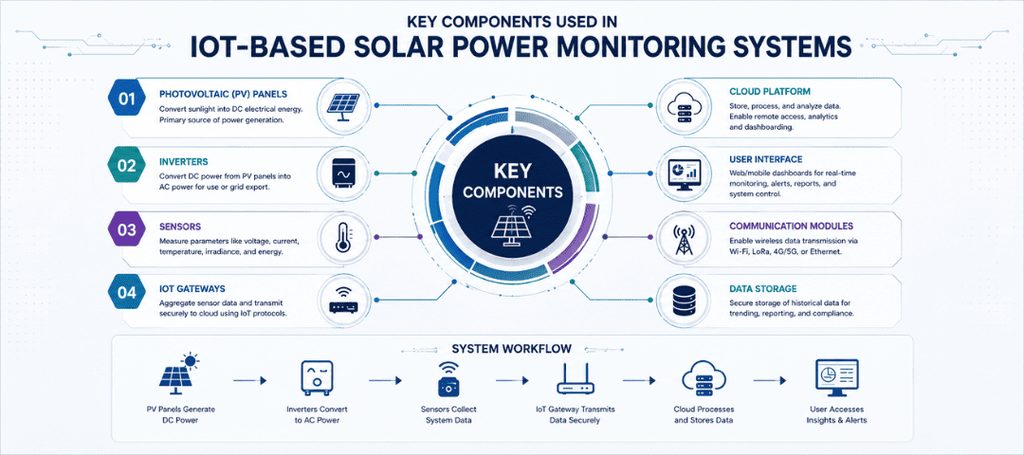
Components and workflow of IoT in solar power monitoring system
Advantages & Future Trends of IoT Solar Power Systems
These systems offer several advantages, such as the following.
- Autonomy: They usually do not require battery replacements and function indefinitely.
- Low Maintenance: Minimal or no changes in battery or wired power infrastructure are required.
- Sustainability: Reduced carbon footprint due to the use of renewable and green energy sources.
- Flexibility: Remote area device installations without grid power access weremade possible.
- Less Downtime: Predictive maintenance for solar power solutions‘longevity and proactive detection.
- Insights: Panel performance, irregularities, wastage, and efficiency are tracked in real-time.
- Visibility: Web dashboard and mobile apps to check and regulate distant solar farm status.
- Decision-Making: Data-driven exams, expansion plans, and prediction tasks to maximum
- Security: Preventive measures for equipment problem identification and reduced system risks.
- Alerts: Automated reporting of performance drops and system malfunction for enhanced safety.
Given below are some of the futuristic trends observed in this rapidly evolving domain.
- Harvesting: Energy harvesting integrated circuits adopted for efficient power management.
- Solar Cells: Transparent multi-junction and efficient perovskite cells for device screens and surfaces.
- Energy Management: AI/ML-based power optimization as per environmental patterns.
- Solid-state Battery: Better temperature performance solar power solutionshigh energy density battery.
- Advanced Sensors: Self-powered sensors for accurate sunlight and temperature measurement.
- Edge Computing: Closer data processing to reduce latency, data sent to cloud and save bandwidth.
- Microgrids: Localized energy integrated intothe power grid for stability, balance, and distribution.
- Blockchain: Supports energy trading, data security, transparency, and AI/ML-powered reliability.
- 5G Connectivity: Faster data transmission through 5G networks for reliable remote monitoring.
- AR-based Maintenance: IoT data visualization for on-site issue troubleshooting using AR devices.
KritiKal: Turning Solar Data into Intelligent Energy Production
To conclude, it is fair to assume that IoT in renewable energy sources is accelerating global power generation capacity at a tremendous rate. These systems form a centralized panel for remote asset monitoring, intelligent risk mitigation, issue resolution, and seamless operational workflow to ensure the required conducive conditions for solar panel energy production.
Challenges
Modern IoT systems for solar energy generation face certain challenges, such as insufficient solar exposure, extreme temperatures, and reliability concerns in specific cases. This may be due to limited sunlight in deployment regions, poor performance of electronics and batteries in adverse climates, and cases where remote devices are required to operate without maintenance, respectively. Another common challenge is compatibility issues between IoT device configuration management and solar components, leading to system failures and efficiencies. Collecting, storing, analyzing, and managing large amounts of voluminous data generated by IoT systems requires expensive analytical tools and infrastructure. Some common failure points in hardware design include an undersized battery, no allowance for solar loss ignoring transmission peaks, using an smart hybrid inverter unnecessarily, and no monitoring of system status.
Other issues related to solar energy monitoring system, include cybersecurity risks, privacy issues against energy usage and system performance, upfront initial investments of sensors, data management platforms, smart inverters, and maintenance costs of IoT components, excessive time consumption, and challenges in ensuring compliance with varying regulations, government policies, and standards that may also affect the financial viability and feasibility of the project. Performance degradation is commonly observed during system scale-up as the number of devices rises, while integration with the existing legacy solar system set up is complex, and a lack of proper planning may disrupt operations.
Solutions
KritiKal Solutions provides end-to-end support for building any IoT-based solar energy monitoring system and application, related network connectivity, wireless technologies, integrated package APIs, edge systems, and cloud platforms. We can assist you in overcoming challenges like low sunlight exposure by conducting site surveys to identify optimized placement of panels, utilizing multiple or larger panels, implementing energy-saving policies, and hybrid power harvesting considerations. We offer redundant systems for rendering critical operations, while our robust design practices enable graceful degradation during limited energy supply that is less important functions are halted while essential functions remain active. Our solutions are embedded with watchdog timers, auto-recovery mechanisms, remote diagnostics, and management capabilities.
These systems can function for years without or with reduced maintenance, battery replacement, and can be deployed across varied terrains and climates. Our reliable, sensor-rich, and autonomous outdoor IoT solutions for solar panel energy production feature IP65+, tamper-evident enclosures, EMC (FCC/CE), IEC 61215/61730, and UN38.3 certifications, and monitoring transforms data collection and utilization methods from the physical world. They reduce utility dependency and high expenses across sustainable industry-agnostic applications like agricultural operations, environmental monitoring, and urban infrastructure development. Our state-of-the-art software designed through firmware development services sends smart push notifications (errors, warnings, offline panel prompts, etc.) and can be installed on multiple devices simultaneously to equip solar power stations with the discussed features and capabilities.
Methodology
We conduct comprehensive estimation for energy budgeting by calculating average power usage in various operational states, determining state-wise duty cycles, computing regular energy needs on a watt-hour basis, considering system inefficiencies, solar panel sizes, geographical location, battery, and autonomy level. For example, a device that consumes 10 mA at 3.3 V for 5 minutes per hour generates around 66mWh of power daily which can be increased to 99mWh when system inefficiencies are cut. Similarly, a 0.5W panel in an area that receives 4 hours of sunlight would generate 2000mWh daily, which is the required or ample energy margin to maintain demand-supply balance on cloudy days.
Average estimations would include low-power anomaly detection, inconsistent power supply, sensor failures, panel sizes, select components, accessibility, low-power monitoring layer (data logger, controller, sensors, and communication modules), and uptime determined by the power layer (solar panel, battery storage, charge controller, and DC power regulation). Examples of practical sizing would include an energy load of 240 Wh per day, a recommended battery backup of 3-5 days at 900-1k Wh+, and solar panels at 70-80 W+ with 4.5 hours of sunlight per day. A stable system must be reliable through low sunlight periods, have data transmission, require minimal maintenance, and automatically recover battery charge.
Other considerations include a continuous energy cycle (the panel generates energy to power the load and store excess for battery charging during the daytime, which supplies power during low sunlight and night). The system stays stabilized if, over time, generated energy is more than consumed. Furthermore, unsteady load characteristics are considered as the solar power monitoring system does not draw consistent power (minimal during sleep/idle – 1W, moderate load during data collection/acquisition/sensing – 3W, and short high peaks that determine stability during data transmission – 10W).
Our PCB and hardware design methodologies ensure minimal quiescent current through components with ultra-low standby power and implementation of power domains by separating circuits that can be powered down. Our IoT development services feature weatherproof enclosure designs with the required IP rating as per the environment of deployment, protection circuits against reverse polarity, overcurrent, and overvoltage, and thermal designs to avoid degradation of battery performance at extreme temperatures. We understand that energy efficiency is dependent on software optimization; therefore, we follow aggressive microcontroller unit (MCU) deep sleep scheduling and returns and code optimization for task completion. We render energy adaptive operations, predictive energy management as per weather and low-energy period forecasts, and over-the-air (OTA) updates for remote power management and optimization strategies.
Practices
We select durable components rated for withstanding the anticipated extreme temperature range, utilize insulated enclosures that feature passive temperature regulation, and use phase-change materials that showcase thermal buffering, while implementing temperature-aware algorithms for charging. We carefully design a self-sustaining, complex IoT-based solar energy monitoring system with cost-effective components by carefully considering and balancing energy storage, consumption, harvesting techniques, and panel angling. Data transmitted between gateways, sensors, and cloud platforms is made lightweight and encrypted against unauthorized access.
Regular software updates across platforms and devices reduce vulnerabilities, data losses, and risks, and multi-factor authentication (MFA) verifies identities of users accessing the dashboards. Our stringent pilot testing and simulation practices ensure that the connected devices are usable and portable to be moved into segments of the scalable IoT ecosystem. We manage the environment monitoring utility in a way that it continues to display power and system usage, temperature, etc., and stays compatible with all regulations and communication protocols across wireless sensor networks and platforms. Please get in touch with us at sales@kritikalsolutions.com to get customized embedded development strategies and a roadmap for solar panel energy production monitoring.

Rajani Kant Mishra currently works as a Senior Embedded Engineer at KritiKal Solutions. He is proficiently skilled in high-speed PCB design, Altium, CADSTAR, HyperLynx, multilayer board design, schematic capture, signal integrity, and more. With his ability to work efficiently in teams and more than a decade of experience working with embedded development, he has assisted KritiKal in delivering innovative and reliable hardware solutions with precision.