

 Global
  United States

What is a User Management App?
The complex digital age ecosystem requires hybrid cloud enterprises and advanced software development services to implement techniques such as an effective application for user management to control actions and secure access to a business’ multiple services, environments, website, network, platforms, databases, operating system, and software.
The administrator of an organization sets up user identification numbers and other details to assign or revoke access authorization seamlessly for its applications and information technology systems through a process called user management. The major components of the same include user profiles for categorization, user roles for defining responsibilities, user permissions for controlling their interactions, and user groups for simplifying multiple role assignments.
Administration tasks such as these can be performed via an external centralized database or directly on the local system concerned to streamline access control, maintain data and system integrity, confidentiality, accountability for user actions, ensure resource availability, enforce security policies while safeguarding information that may be sensitive in nature.
The current global market for user management software is estimated to be around US $5.2 billion as of 2025 and is expected to surge and reach an approximate value of US 12.1 billion by 2033, increasing at a CAGR of 9.9% during this forecast period. Let us now go through the importance of user management further in this blog and how it helps in evolving workplaces with security requirements, hybrid and remote team cultures, software-as-a-service sprawl, identity and permission management, and more.
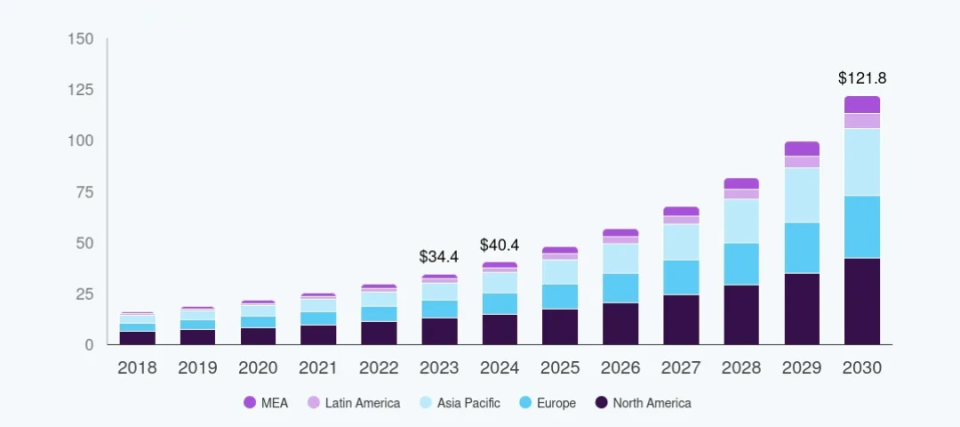
Source: Grand View Research
Growing market size of user management as a service during the forecast period 2018 to 2030
Key Functions of User Management Software
Here are the main components that define user management enforced by the administration.
Creation
The main tasks involved in user creation include the addition of new users by incorporating uniquely identifiable usernames, organizational affiliation, passwords, and detailed information like full names, email IDs, contact information, and other details in their profiles across the system. This helps in identifying the individual and categorizing their job role within the environment concerned.
Authentication
The main tasks involved in user authentication include the verification of users that need to be granted access to the platforms, and more. The process involves multi-factor authentication, biometrics (retina, voice, face, DNA, fingerprint), digital or JSON web tokens, complex passwords (salting, hashing, encryption), USB security keys, informational questions set previously for account recovery, alerts (push notification, SMS, email, OTP) and approval on a specific device, and a combination of other techniques.
Authorization
Post authentication; handling user management software involves user authorization for collating the documents, resources, defining their actions, classification of functionalities, user roles, and data that the user is authorized to access, update and modify. The administrator grants permissions, assigns roles, and invokes access levels for further actions by the user, a group of users, or a particular individual such as a client that is maintained in access control lists.
Modification
The main tasks involved in user modification include changing the user’s contact, view role, updating the password, resetting access permissions, controlling access rights, interacting with data and systems, etc. by the administrator. Web application development services can be used to invoke the same in case of changes in the responsibilities performed by the user to accommodate the organization’s decisions and requirements.
Deletion
User management service further involves user deletion for decommissioning or deactivating the user profile and preventing further access to their data or actions performed within the system. This is usually done when the user is no longer involved with the organization, has taken leave from the same, or undergoes a change of completely different roles and responsibilities. Effective user management and application development and maintenance prevent unauthorized people and former employees from accessing the company’s data and sensitive information.
Monitoring
The main tasks involved in user auditing and monitoring include tracking user logs, software licensed accounts, activities, and properties for identifying unauthorized and suspicious actions, maintaining records of interactions, assuring compliance, and enhancing security. It allows simplified permission management and continuous monitoring of collectively categorized user groups where multiple users are granted or assigned certain rights simultaneously by the administrator, such as in a stock monitoring system
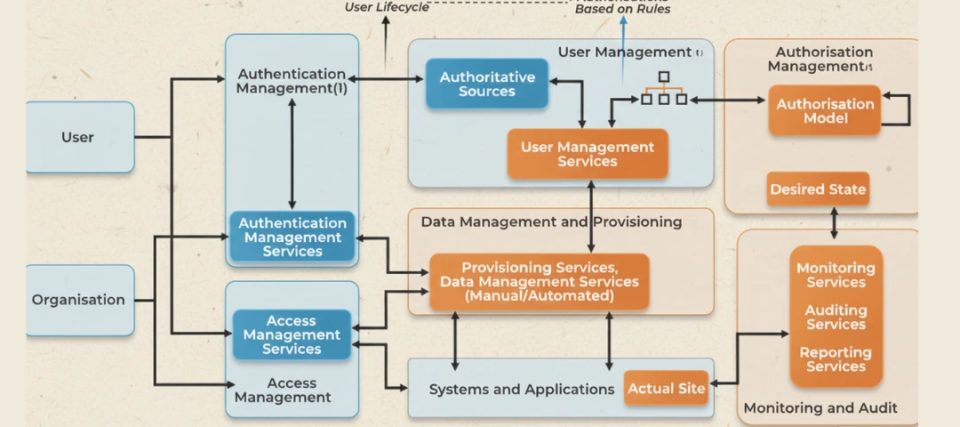
High-level architecture diagram of user management application
Approaches of User Management Service
The following are the approaches of user management, where each level addresses organizational requirements as per business growth and adoption of newer technology.
Resource Access Management
RAM involves management of policies related to access granted at the resource level, such as in cloud-based ERP system and environments, to control user and system actions. On premise identity provider comprises two modules for user or group management and centralized user directory. These feature components for user creation, management of passwords and administrative tasks, user role tracks, and user account configuration.
Directory-based Management
This type of user management app mainly focuses on the storage of identity data in repositories, such as the active directory system, lightweight directory access protocol, or Apache directory services. This approach provides self-service options for task management and load reduction on resources. It allows administrators to get a unified view of all users, their permissions, and group data across the entire organization’s IT systems.
Identity & Access Management
IAM includes conditions, cookies, and policies for authorization and authentication alongside cloud services, directory, APIs, and OAuth2 integration. Identity as a service is a broad cloud-hosted and managed service framework that is usually provided by third-party vendors. It consists of all RAM features apart from its cloud-based nature and is easier to set up, maintain, and scale.
User management as a service is used to manage user identities, control access to certain infrastructure, and corporate data resources across on-premises and cloud systems as per the given conditions related to device and location during a particular period. A user management service can comprehensively manage users from multiple tenant organizations utilizing software as a service application through custom application development services.
Advantages of User Management Software
There are various advantages to using software for managing users, such as the following.
1. Security: User management prevents unauthorized role-based permissions and access to necessary infrastructure and multi cloud-based applications through multi-factor authorization, continuous user activity monitoring, zero-trust architecture implementation for product-led growth, security threat, shadow IT, compliance failure, and data breach monitoring, granular access control, etc.
2. Efficiency: It enhances administrative, production, and operational efficiency and decreases overhead by simplifying compliance and auditing requirements. It automates processes such as user offboarding, onboarding, lifecycle, identity, and change management, reduces account-related expenses, time, and resources involved in manual provisioning. It decreases user downtime and occurrences of password reset issues, implements centralized access control, and streamlines audits for efficient logistics.
3. Management: It simplifies management of user profiles and attributes inclusive of actions such as creation, addition, update, and deletion in the user management application and platform in one go. Administrators in the network and system domains can easily reduce complexity, human errors, and control user access to application accounts, infrastructure, or resource through a centralized or universal database cum directory especially in the case of e-commerce app development.
4. Consistency: All user groups can remain synchronized throughout relevant apps for maintaining data consistency via automated SCIM-based (system for cross-domain identity management) group provisioning techniques where certain access levels are granted to them. Users can easily collaborate and are empowered to perform quick actions without any delay in retrieving user access to cloud services from the start. Since manual operations are eliminated, errors related to the addition of a user to the system, granting access to the user management application, etc., are reduced considerably, especially in the case of medical inventory management system.
5. Experience: It guarantees flawless user experience through convenient features such as self-registration via custom single sign-on with just in time, social or multiple login, menus, personalized user sign-in and editing in terms of themes and options as per organization brand, self-service password reset using any browser or mobile device, etc.
Automate User Management with KritiKal
KritiKal offers modern user management techniques, such as cloud-powered IAM and more, that extend beyond manual identity provider techniques. We deliver advanced access and session controls, role-based user provisioning, user onboarding, offboarding, deprovisioning, and other user management functions across multiple user groups. Our effective governance practices include centralized policy enforcement, RBAC for granular permissions, and periodic access reviews across various systems and tools, etc.
We ensure to implement strong data protection measures as per general data protection regulations including legacy app modernization, encryption, continuous audits, strict authentication, and more for safeguarding sensitive organizational information and compliance maintenance. We eliminate manual gaps through our user management platforms that unify identity, access, and device management alongside improving efficiency. Ultimately, it is fair to say that robust security control measures, privileged access controls, simplified onboarding workflows, and scalable user management app is proven to be strategic enablers. Please get in touch with us at sales@kritikalsolutions.com to know more about our software-based products, platforms, services, and realize your business requirements.

Golu Singh currently works as a senior Software Engineer at KritiKal Solutions. He is proficiently skilled in DevOps, Cloud, AWS, ECS, Terraform, Docker, Jenkins, CI/CD, Linux, SonarQube, Git, Bitbucket, Kubernetes, SRE, and more. With his ability to support, automate, and optimize mission-critical deployments over large infrastructure, configuration management, and experience of working with ambiguous use cases, he has assisted KritiKal in delivering various projects to some major clients.