


 Global
  United States
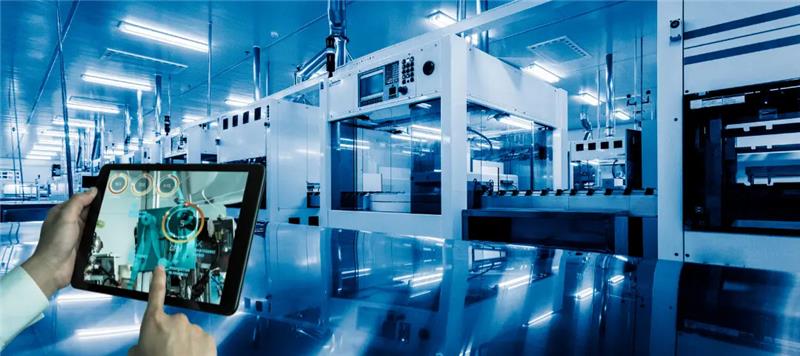
What is a Manufacturing Execution System?
Today, the manufacturing industry is reorganized with evolving trends and technological advancements. Businesses in this domain face issues, such as shortage of labor, errors in data, and obsolete legacy systems that restrict their agility in the competitive market. A manufacturing execution system is a software that ensures that all manufacturing and production-related operations run by a business occur in an efficient manner. It connects data flows across factory floors, systems, machines, production equipment, and work centers while monitoring and controlling their performance for optimal yield.
It continuously tracks, documents, and gathers data from all these components in real-time throughout the product manufacturing lifecycle and processes right from order retrieval to delivery or raw materials to finished goods. Businesses in this domain benefit from in-depth performance analysis, seamless management measures, real-time tracking of work in progress, traceability, and genealogy details provided by these systems. Such data insights help them to make informed decisions, plan, and optimize machinery operations.
The current global market for manufacturing execution system solutions is estimated to be around US $18.87 billion as of 2026 and is expected to surge and reach an approximate value of US $29.35 billion by 2031, increasing at a CAGR of 9.23% during this forecast period. Let us now go through the importance, features, functions, tools, modules, and advantages of MES in detail further in this blog, which can be useful to comprehend how this software increases manufacturing plant efficiency.
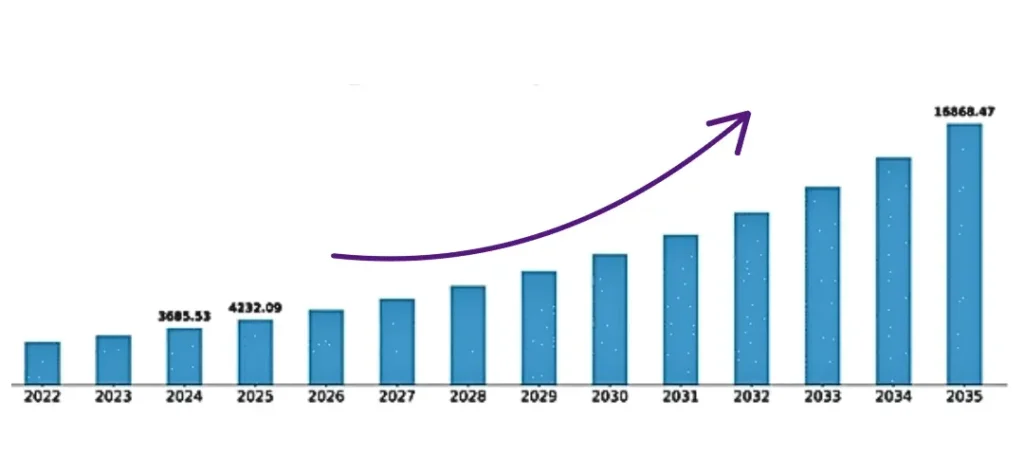
Source: Market Research Future
Growing market size of US manufacturing execution system MES during forecast period 2022 to 2035
Key Functions of MES System for Manufacturing
The main functions of this system are based on the MESA-11 model, where MESA stands for the Manufacturing Enterprise Solutions Associations. It is an organization that oversees applications of information technology, particularly in the operations management domain. Given below are its core interconnected functions as per the model that streamline shop floor operations and enhance decision-making processes.
Quality Control
MES powered by vision inspection system ensures compliance with predefined standards and regulations by triggering necessary alerts, capturing/acquitting, and recovering high-quality data alongside highlighting deviations, defects, and exceptions. It provides a live, panoramic view of the factory setup while assessing the quality of manufacturing processes and equipment involved whenever required for resolution management.
Operator Management
The software tracks the performance of operators, for example in medical device contract manufacturing environment, and assigns and changes responsibilities on a roll as well. It performs well-organized document control, thus providing a simplified process for accessing documents of instructions, notes, and drawings for operators.
Downtime Monitoring
It tracks and pinpoints the cause for machine vision applications or production stoppage and delays. This helps in efficient maintenance management, planning downtime, and preventing machine damage accurately. Intelligent video analytics and reporting tools are utilized for in-depth performance analysis and production data evaluation. This feature of manufacturing execution system solutions helps with planning, gauging efficiency, continuous improvement, and productivity.
Resource Management
It can perform efficient assignment of tasks to people and chart out the required tools, materials, products, equipment, operations, and machine occupancy accordingly in an optimized manner alongside human action recognition. Basically, it outlines and tracks the utilization, dispatch, and status of resources/employees in the assigned set up to ensure they work in the right place and yield maximum efficiency as per production schedules.
Traceability
All the steps involved in the process and the materials moving back and forth are tracked so that operators gain a complete record of production. Manufacturing execution system solutions manage the data flow in real-time between the shop floor and the ERP system and control the dispatch of production units.
Inventory Management
All finished products, raw materials, semi-finished goods involved, or disturbances in noise monitoring are consistently monitored by MES in collaboration with stock monitoring system. As per the analyzed data, it plans operational sequencing, process routing, and calculates and determines key performance indicators (KPIs), including capabilities, overall equipment effectiveness (OEE), rework, scrap generation, process efficiency, rewards for resources, etc.
Production Tracking
This software can schedule, track production, and provide real-time updates and progress of process flows with timestamps and quantity details. It also specifies planned work order achievements and offers a global view of the production routing to operators and decision-makers. It groups and categorizes batches, finished parts, or goods as per the corresponding process data for seamless production flow from raw materials to component assembly.
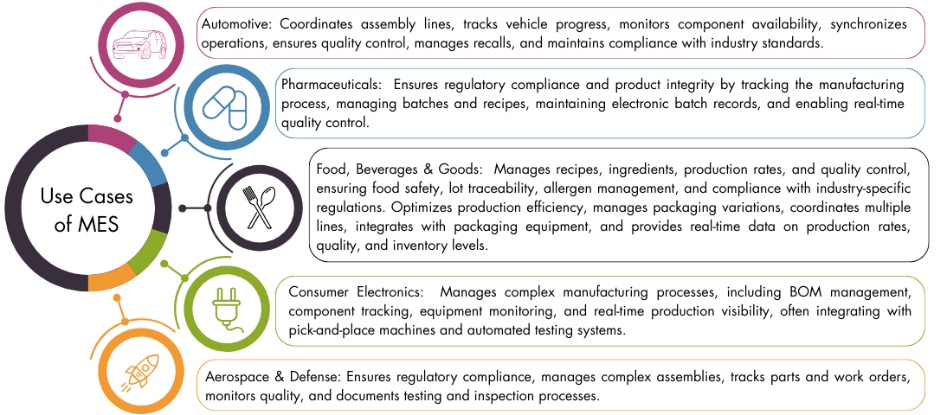
Various industrial applications and use cases of cloud-based MES system
How Does Cloud-Based MES System Work?
- The MESA model was redefined with the collaborative-MES update to include business-related operations, such as asset optimization, outsourcing, and market competition alongside core functions. This update created links between the MES and the Enterprise Resource Planning (ERP), Customer Relationship Management (CRM), Business Intelligence (BI), and other software.
- The ERP systems conduct extensive planning of production quantity and period of operations, while the cloud-based MES system focuses on executing the plan, therefore leading to successful shop floor output. The combined C-MES model covered strategic initiatives for business, plant, and production operations at the enterprise and other levels and disciplines. Thus, creating a platform for planning and interdepartmental understanding for enhanced performance.
- The defined architecture of this model makes it act as an intermediary (Level 3) between the management level (ERP, business planning, Level 4) and the automated shop floor (process control, Level 0,1,2) and as an integrated hub that supplies information throughout the organization and supply chain. The ANSI/ISA-95 international standard creates a functional hierarchy for MES by combining the MESA-11 model with the Purdue Reference Model.
- Traditional MES architectures are based on client-server models, while modern MES systems may function on different types of models as per the organization’s requirements. Nowadays, instead of communication between multiple clients and a central server, a cloud-based manufacturing execution system is becoming more prominent.
- In this, the work is shared amongst multiple servers to balance load and provide reliable, flexible, controlled, scalable, and secure service via HTTPS. The business can render its own data center or that of an external provider for the cloud-based solution to operate.
- Careful planning and execution are of paramount importance in MES implementation, and it starts with clear identification of goals, followed by phased integration and gradual rollout. Goals could be enhancing regulatory compliance, quality, and operational efficiency that can be achieved on critical equipment with a pilot in a limited area.
- Open and early communications are necessary for quick wins, building employee confidence on new MES systems, addressing concerns, and engaging stakeholders. Strong management strategies and targeted training programs are equally important for larger acceptance, effective use, overcoming resistance, and long-term organizational success.
Benefits of MES System for Manufacturing
The MES has multifaceted advantages and capabilities as an intensive system deployed across the shop floor. Considering its various core and support functions, it serves as a functional layer for manufacturers to increase operational efficiency in real time. Some of the benefits it offers are as follows:
1. Visibility: It ensures optimized production processes at all levels by providing operations and manufacturing leaders with real-time information, such as the status of product trails, equipment usage, resource allocation and availability, etc.
2. Consistency: It helps all personnel to track operations and maintain consistency and security across the same. It eliminates chances of duplication, redundancy, and loss of important information mainly caused by paper-based documentation.
3. Quality: Cloud-based manufacturing execution system sustains efficiency across the controlled business environment and shop floor against undesired events, resulting in better quality of goods and timely enforcement of procedures. It helps the processes in effortlessly meeting with ISO, GMP, FDA, and other regulatory requirements. Real-time alerts are sent to business systems related to any quality issues or material defects reported through AI defect detection on the shop floor. Further corrective measures can be deployed, such as removal from inventory and return to the supplier for refund and replacement, thus avoiding liability issues and recalls.
4. Satisfaction: Customer requirements are automatically met as the consistency and quality standards of procedures, and finished goods are ensured. It allows lean manufacturing, reduced cycle times, and increased OEE through real-time, faster, visible, and accurate data exchange between the business and production layers.
5. Frugality: MES records device usage history and keeps digital manufacturing transformation master logs, which eliminates the need, cost, time, and effort otherwise utilized for manual data entry, storing, filing, and tracking shop floor paperwork.
6. Traceability: When integrated with ERP, this software links lot numbers between raw materials with finished goods and items currently under production. Mission-critical production data is spread across the supply chain and manufacturing stakeholders and improves documentation, tracking, and quality compliance and avoids chaos.
7. Optimization: MES system for manufacturing helps in reducing scrap and rework, maintaining product capacity, and inculcating a streamlined environment through inconsistency detection. As it captures expenses related to tools, scrap, downtime, labor, etc. over the shop floor, it improves management of shop floor data transactions, operator speed, efficiency, and documentation.
8. Destocking: MES helps in reducing inventory and related expenses by ensuring that the organization stocks the specific amount of material required for the subsequent future. It helps in planning just-in-time inventory strategies that save effort and costs for businesses.
9. Decision-Making: It supports prompt decision-making, change orders, and demand forecasting through its various functions. It helps integrate and standardize comprehensive business processes, as personnel can record, track, and execute activities across the shop floor. Fully integrated systems record demand, product delivery, and pricing changes in ERP to be fed later into manufacturing schedules for apt production quantity.
10. Continuity: This software reduces the empirical state of downtime by integrating IoT for predictive maintenance and overall scheduling faced by every manufacturing organization. It initiates tasks as and when the right tools are ready, source inventory is at optimal levels, and machines are maintained in the defined manner, which increases uptime.
Conclusion
In this blog, we observed that a Manufacturing Execution System MES acts as the control tower for a factory setup and ensures that the production runs are functioning as per schedules. Unlike traditional data entry procedures, it captures shop floor data in real-time and provides integration and visibility across the organization. KritiKal develops advanced MES systems to automate data source connections to minimize downtime, bottlenecks, and improve performance tracking and operational capacity.
We make sure that MES software development and implementation overcome all present challenges, such as issues related to cybersecurity, data quality, system integration, change management, and customization expenses. We enable accurate automated performance tracking of work orders, machine and equipment efficiency, and OEE through careful planning, skilled IT support, collaboration amongst cross-functions, and flexible platforms. We offer integration of advanced technologies, such as AI, IoT, and BI analytics, that uplift traditional MES to the level of a connected and smart factory solution for smarter decision-making, delivering long-term efficacy, and supporting overall digital transformation of manufacturing setups of all sizes. Please get in touch with us at sales@kritikalsolutions.com to know more about our software-based products, platforms, services and realize your manufacturing business requirements.

Prateek Gupta currently works as a Testing Engineer at KritiKal Solutions. With extensive experience as a software testing professional, and expertise around SDLC, STLC, SQL, Jira, Postman, Cypress, testing methodologies including functional, regression, ADHOC, UI/UX, localization, compatibility testing, and more, he has helped KritiKal in delivering some major projects to global clients.