


 Global
  United States
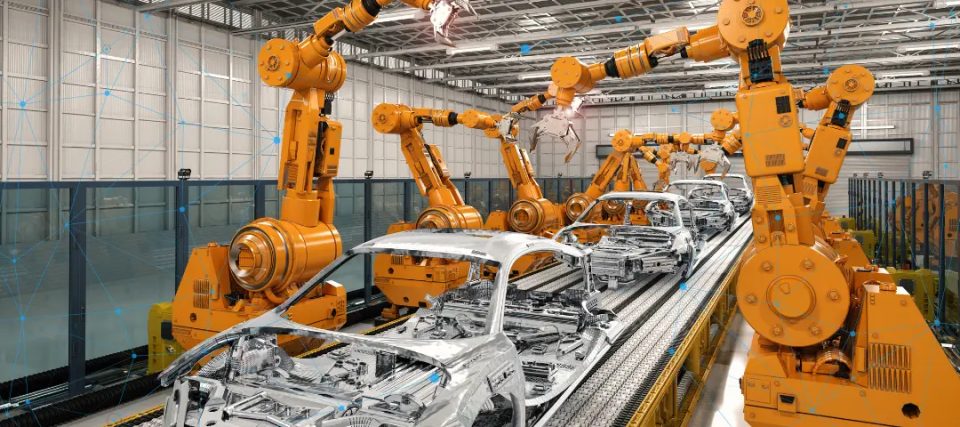
What is Digital Transformation for Manufacturing?
Technology has played a critical role in the manufacturing industry over the years, assisting manufacturers to stay ahead of the curve while infusing the same in business processes. Transforming the shop floor of a manufacturing environment digitally marks the intersection of operations, business, and product innovation. It refers to the process of integrating technologies of the modern era like Robotic Process Automation (RPA), Artificial Intelligence (AI), cloud computing, data analytics, the Internet of Things (IoT), and others into back office and production processes. This is supported with IT solutions for manufacturing which results in automation of manual, potentially dangerous, resource, and time-intensive operations that are especially useful during times of labor shortages.
It surpasses the constraints of conventional manufacturing execution systems as it automates and manages the performance of all processes continuously in an error-free manner. It includes all aspects of manufacturing execution systems, such as production, warehouses, maintenance, quality inspection, and even human resources. With digital transformation in manufacturing industry, and other software development services, businesses can simultaneously increase throughput levels, visibility across global value chains, competitiveness, and production performance; reduce expenses, the generation of waste, and ensure to maintain customer satisfaction, sustainable innovation, and quality.
Therefore, such transformation has risen from mere tactical and operational aspects to syncing with business objectives, such as those mentioned above. The global market for transforming manufacturing digitally is valued at US $440 billion as of 2025 and is likely to surge at a CAGR of about 13.83% to reach a value of US $847 billion by 2030. In this blog we will explore how transforming conventional manufacturing techniques by establishing various stages of a digital thread across product lifecycles, functions, and assets can connect gleaned insights to a multitude of value benefits for all stakeholders.
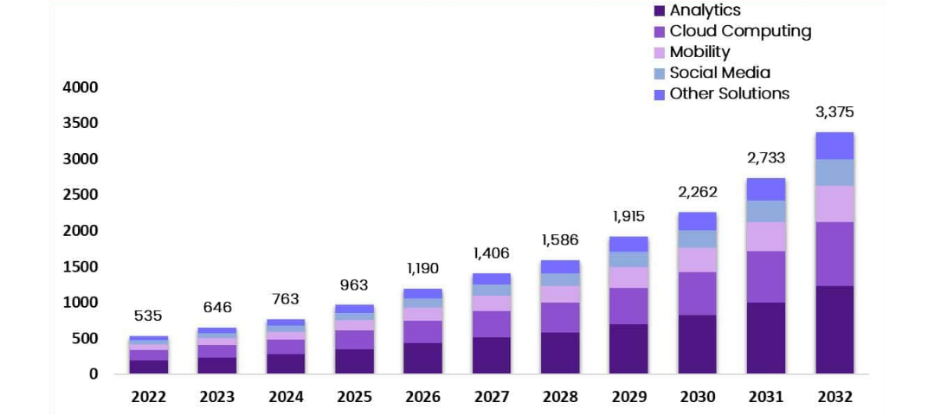
Source: Market.us
Forecasted market size of implementing digital transformation across industries from 2022 to 2032
Stages of Digital Manufacturing Transformation
Organizations are integrating new business models where transforming manufacturing digitally alters conventional processes, services, and products into data-oriented connected solutions for increased efficiency and profits radically. These models function on a digital-first approach that can accelerate time-to-market and improve customer value through promising digital experiences. We will now discuss a step-by-step process of implementing digital transformation operations in a manufacturing setup.
Problem Definition
Businesses need to conduct a detailed examination and assessment of the current processes, such as defect detection in manufacturing, and all the areas that lack digital integration, pain points, bottlenecks, digital maturity, and inefficiencies must be highlighted using research and data analytics. Challenges faced by stakeholders of all levels and appropriate transformation solutions and baselines to be aligned with organizational requirements must be discussed. Once the overall attainable and measurable objectives are defined, they need to be aligned with Key Performance Indicators (KPIs). For example, enhancing supply chain tracking, improving product quality, and minimizing production downtime to gain actionable and tangible benefits from electronics manufacturing services.
Planning
Different alternative feasible and impactful solutions must be considered to weigh the respective pros and cons of implementing digital transformation as per a blueprint or strategic roadmap that outlines every measurable phase or chunk. Multiple software tools and machine vision applications can be integrated on a single platform as the structured project plans, timelines, resource requirements, responsible teams, outline of the working of the solution with respect to manageable tasks, etc. are created. As the ‘what’ and ‘why’ of transformation are addressed, areas such as communications plans, skill training, and culture change must be integrated into action. All stakeholders and employees must be made aware of the changes such that it eases their work towards achieving organizational goals without any disruptions.
Implementation
As implementing the solution is categorized across various parts and timelines, such as those mentioned below, any challenges experienced must be tackled with the help of Industry 4.0 experts.
- Digitization: It is a tactful strategy to start relying on digital platforms, tablets, mobile apps, and electronic documents rather than printed paper, such as checklists, scopes of work, agreements, operational notes in medical device contract manufacturing, etc., to increase visibility, implementation pace, efficiency, and scalability. Machine performance tracking sensors, quality and production tracking dashboards, and cloud-based historical records help factories, shop floor operators, and the management to capture accurate, real-time information that can be used in later stages where RPA, AI, and analytics would be applied.
- Optimization: All operations are tracked for reducing waste, delays, and improving day-to-day activities in the factory. For example, alerts are triggered by machine data and not as per time-based cycles for maintenance, energy conservation, or automated schedule as per capacity showcased over the stock monitoring system or against slow movement of production lines and expenses.
- Transformation: Businesses consider integrating digital transformation for manufacturing when they look forward to entering new markets without opening physical branches, introducing new services, products, or tackling existing inefficiencies using digital tools and channels. Certain examples include giving all stakeholders visibility into order tracking and updates through digital portals, forecasting demand as per market trends, historical and real-time sales using AI, and changing the business model to machine performance-based service contracts from regional sales.
Monitoring
When operations, such as label inspection, have been digitally transformed, continuous monitoring and refinement should be integrated alongside the same. Improvement markers can be quantified using the below queries.
- Has the accuracy of data entry improved post automation? Is the data entered more consistent, clean, and insightful as compared to manual entry?
- Are the business’s old and current customers satisfied with the improved service and experiencing higher accuracy and faster results as compared to prior operations?
- Is the transforming solution responsible for new revenue streams? Are the new services and products developed using digital tools and channels generating higher income than earlier?
- Are the internal and client teams able to cooperate with transformed tech mediums, systems, and tools? Is there any or no frequency rate of falling back to utilizing old tools, technologies, methods, or machinery?
- Have labor efficiency and output delivery rate increased, decreased, or remained the same prior to and after implementation of digital manufacturing transformation solutions?
- Is there any enhancement in the overall speed of developing products from ideation, design, and development stages to introduction in the market?
- Has the implementation led to decreased downtime trends and unplanned outages, or is it leading to the vice versa?
- Are maintenance response teams able to work more efficiently due to faster flagging of issues using sensors and analytical dashboards?
- How does the return on investment seem to be on newer projects as compared to earlier? Is the business able to profit from or gain measurable returns from the new digital initiatives implemented?
- Has the error rate related to mundane manual steps and routine tasks reduced drastically since the implementation?
- Is the throughput per production or assembly line, such as circuit board assembly services as per business requirements? Are there any more delays or substantial increases observed in the overall production of output or yield?
Such queries need to be considered over a certain period that may be short or long-term, such as weekly or quarterly reports, etc., as and when the digital strategies are deployed. This allows factories to track defined objectives and make required adjustments for improvements.
Refinement
The data analyzed upon testing, monitoring, and measuring pilot projects can suggest whether any more changes need to be executed. Smart manufacturing solutions are chosen amongst various technologies, processes, and adjustments as per received feedback and are approved at all levels. Thereafter, risk assessment, monitoring, analysis of the outcome, and gradual scaling should be done over time. An appropriate company culture that caters to and moves alongside continuous improvement and measurable changes must be inculcated, right from key decision-makers to all stakeholders.
To ensure the same, ample training and support must be provided to all shop floor employees and the management to understand the technologies and value benefited. Alter or course-correct the executed solution with respect to evolving client preferences, market trends, competitive innovation disruptors, insights into internal operations, underserved areas of improvement, KPIs, business goals, performance analytics, feedback, and new lucrative opportunities to maintain agile and responsive services using intelligent video analytics.
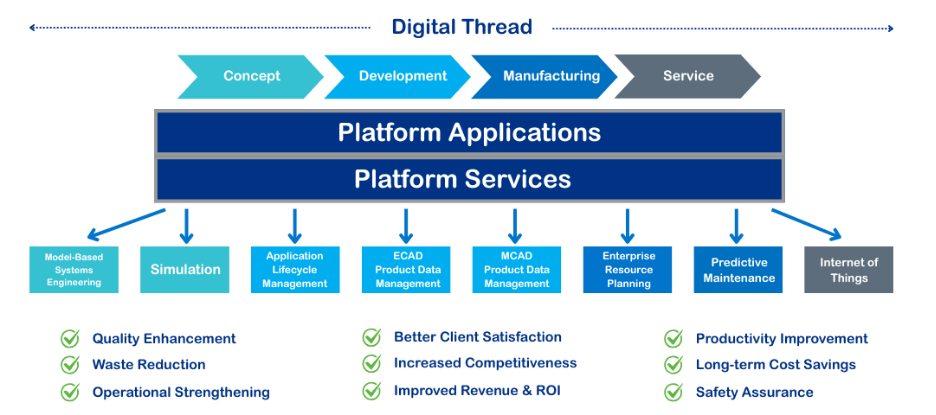
Features and advantages of deploying digital transformation in manufacturing industry
Core Technologies of Digital Manufacturing Transformation
Being a business imperative, transformation focuses on simplifying all aspects of a manufacturing organization, including front-line operations, while assuring quality and safety using human activity recognition. It makes room for informed decisions, team management, expanded technological adoption, changing market conditions, data aggression, business growth, and respective responses. We will now delve into the advanced tools that facilitate such transformation.
Internet of Things
IoT enables automated data gathering through sensors that connect to industrial devices, networks, and digital analytical platforms. It reduces the risks involved and the amount of time consumed in collecting and analyzing such information. Manufacturers glean insights into machinery performance, equipment condition, and processes even from branches afar from factory setups. Insights obtained using IoT for predictive maintenance can be applied for enhancing supply chain, inventory management, predictive maintenance, environmental control, business intelligence, etc.
Artificial Intelligence
An amalgamation of AI, Machine Learning (ML), IoT development services, and sensors can enhance real-time analysis of data and process automation. AI identifies and analyzes data trends, and patterns within large datasets using Big Data techniques, makes predictions, and provides recommendations through graphs, reports, and charts related to machinery maintenance, production process improvement, market trends, quality control expeditions, RPA object manipulation, customer preferences, and more. AI in digital manufacturing transformation also helps in reducing errors in demand forecasting, inventory tracking, predicting product or assembly line wear-out, etc. to maintain flow efficiency in the production cycle and strengthen decision-making.
Robotics
Automation can perform repetitive, tedious, potentially dangerous, or risky manual work without experiencing any fatigue and committing errors, such as product assembly, packaging, programming, quality control, or even common work order approvals via mail. Robots can pick and transport corrosive inventory across warehouses and assemble heavy or sharp machinery parts on the factory floor. As the work gets done at a faster pace with minimal errors and unnecessary workload over employees, productivity and profitability improve accordingly.
Modernization
Modern software and modernization of applications can help manufacturers in gathering important data in a centralized database from disparate systems. This may include the following.
1. Enterprise Resource Planning (ERP) Software, which allows different departments in a manufacturing setup to leverage insightful data for decision-making. Manufacturers relish the flexibility and swiftness of deploying modern solutions backed by the cloud over legacy infrastructure deployed on-premises that is resource-intensive.
2. Some mundane business operations can be moved over to a responsive digital architecture or offsite Cloud to free up office space, improve security, accessibility, reduce costs against physical server expenses, maintenance of resources, and risks of data loss due to theft, fire, or natural disasters. It serves as a useful tool to manage, store, and access data from across the globe in a streamlined, controlled, and secure manner.
3. Customer Relationship Management (CRM) automatically keeps track of all customer-related history, delivered product details, production methodology, transactions, interactions, and provides a 360-degree overview of each account. Such insights can be used to farm, hunt, or target similar clients with marketing campaigns for increasing profits.
4. Digitized programs or Accounting Software for digital manufacturing transformation can keep accurate track of invoices, transactions, business financial health, expenses, revisions, history, etc. in real-time over a collaborative single platform. It eliminates the need for handling multiple spreadsheets, file attachments, separate resources for accounting, and even manual tax calculation. It also features a digital representation of the Bill of Materials (BOM) that is reliable, traceable, and accessible.
5. Project Management Software can keep track of all projects and analyze business productivity on a regular basis. Integration Software eliminates the need for discussions over mail for intelligent task automation, connects different systems, and eases collaboration as a cohesive unit or quick individual feedback collection. Seamless data integration across the digital thread and systems such as Computer-Aided Design (CAD) add-ins, APIs, inventory software, etc., thus reducing the friction between legacy systems, design, production, inventory gaps, and RFQ aggregation for vendors and suppliers.
Start Your Transformation Journey with KritiKal
Digital transformation in manufacturing industry has become a necessity to stay agile, competitive, efficient, and ahead of the curve from a global point of view. The need for the hour is a complete oversight or end-to-end visibility of operations, procurement, inventory, quality, supply chain, and management over a unified platform. Advanced technologies such as AI, IoT, ML, data analytics, RPA, cloud computing, ERP, CRM, low-code/no-code solutions, and more are assisting manufacturers in staying vigilant against evolving market trends and customer preference dynamics.
Automating conventional shop floor data collection methods and generating real-time insights supports informed decision-making and continuous process improvement. KritiKal Solutions has assisted various enterprises, startups, small and medium-sized businesses in overcoming different types of challenges faced during digitally transforming operations run through conventional methodologies. We have uplifted organizations in addressing issues with legacy systems, cybersecurity, data integration, covering manufacturing workforce skill gaps, managing budget constraints, and also in overcoming tech complexities and resistance to change.
We understand that outdated infrastructure can limit data flow and potential for automation, digital readiness, disrupt privacy, security, and complicate large-scale digital initiatives. We automate manufacturing solutions through a phased approach while we help businesses surpass such barriers through production scheduling, quality-related hurdles using a vision inspection system as per benchmarks like ISO 9001, demand forecasting, transparent communication, cloud-enabled platforms, and quick deliveries that build customer confidence. Please get in touch with us at sales@kritikalsolutions.com to combine your niche manufacturing expertise with our data-driven, intelligent automation solutions to attain long-term business value.

Shashank Upadhyay currently works as a Senior Quality Engineer at KritiKal Solutions. With over a 5 years of experience as a software testing professional, and expertise around SDLC, STLC, SQL, Jira, Postman, Cypress, testing methodologies including functional, regression, ADHOC, UI/UX, localization, compatibility testing and more, he has helped KritiKal in delivering some major projects to global clients.